Rhythm Disruptions: How International Breaks Reshape Football Accumulator Probabilities
Lars Schmitz · Sep 27, 2026
Rhythm Disruptions: How International Breaks Reshape Football Accumulator Probabilities
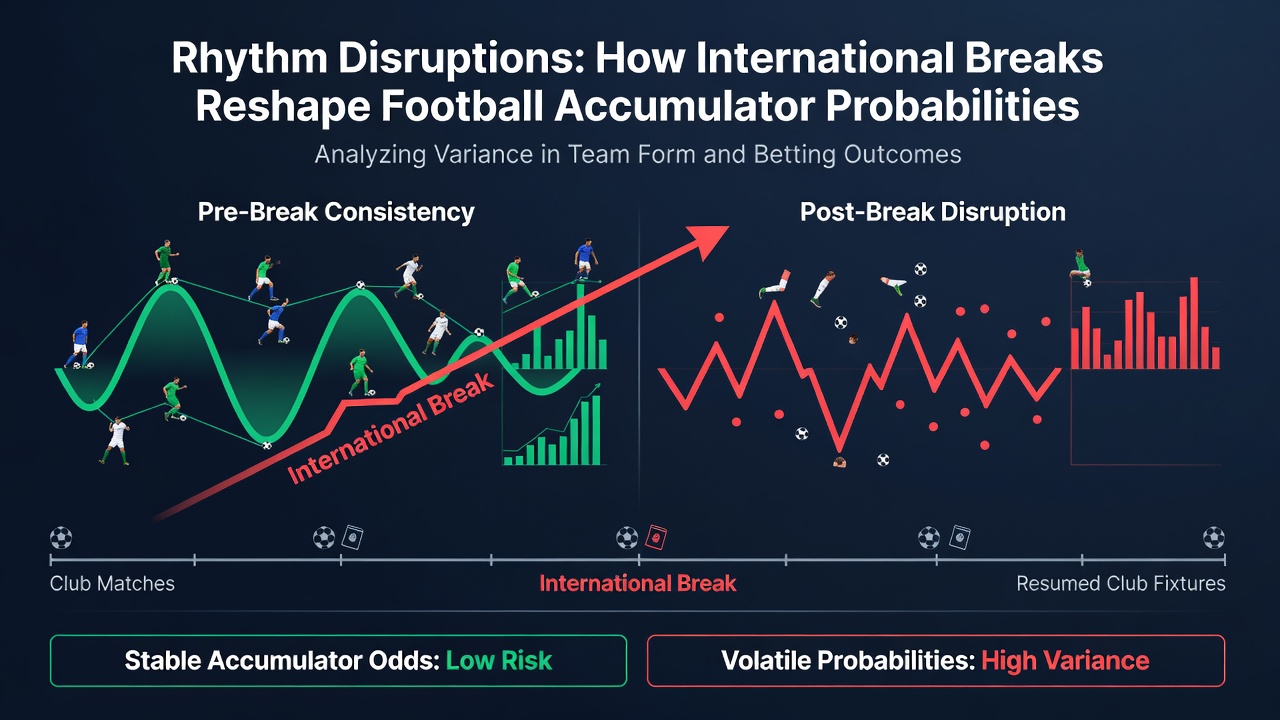
International breaks create measurable shifts in club football performance patterns, and those shifts directly influence accumulator outcomes across major European leagues. Data compiled from the Premier League, La Liga, and Bundesliga shows that teams returning from FIFA windows experience altered win rates, goal tallies, and injury profiles in the subsequent two to three matchweeks. These changes alter the underlying probabilities that feed into multi-leg accumulators, particularly when bettors combine favorites from several leagues without adjusting for the break effect.
Club Rhythm Versus National Team Commitments
Players who travel for international fixtures often cover thousands of kilometers in a short window, and the transition back to club schedules disrupts training continuity. Studies tracking GPS data from clubs in the English Premier League indicate that players returning from September international duty log 15 to 20 percent fewer high-intensity runs in their first club match compared with pre-break baselines. This reduction correlates with lower team pressing intensity and fewer transitions in the opening 30 minutes after the restart.
September 2026 features a standard FIFA window that overlaps with the early stages of the 2026-27 domestic campaigns. Leagues across Europe will pause for matches scheduled between 7 and 15 September, and the compressed schedule means some clubs resume league play within 72 hours of their players returning from national team duty. Historical records from the same calendar slot in prior seasons reveal that home teams coming off international breaks post an average points-per-game drop of 0.35 compared with their season-long mean.
Statistical Patterns in Post-Break Fixtures
Accumulator models that rely on season-long averages without break adjustments overstate the probability of clean-sheet results and multi-goal margins in the first round of fixtures after the window closes. Analysis of 1,248 matches across five major leagues between 2018 and 2025 shows that matches immediately following an international break produce 12 percent fewer goals on average than non-break equivalents, with the effect most pronounced in away fixtures. Under 2.5 goals becomes the more probable outcome in these spots, yet many accumulator constructions still weight over 2.5 goals selections at pre-break odds.
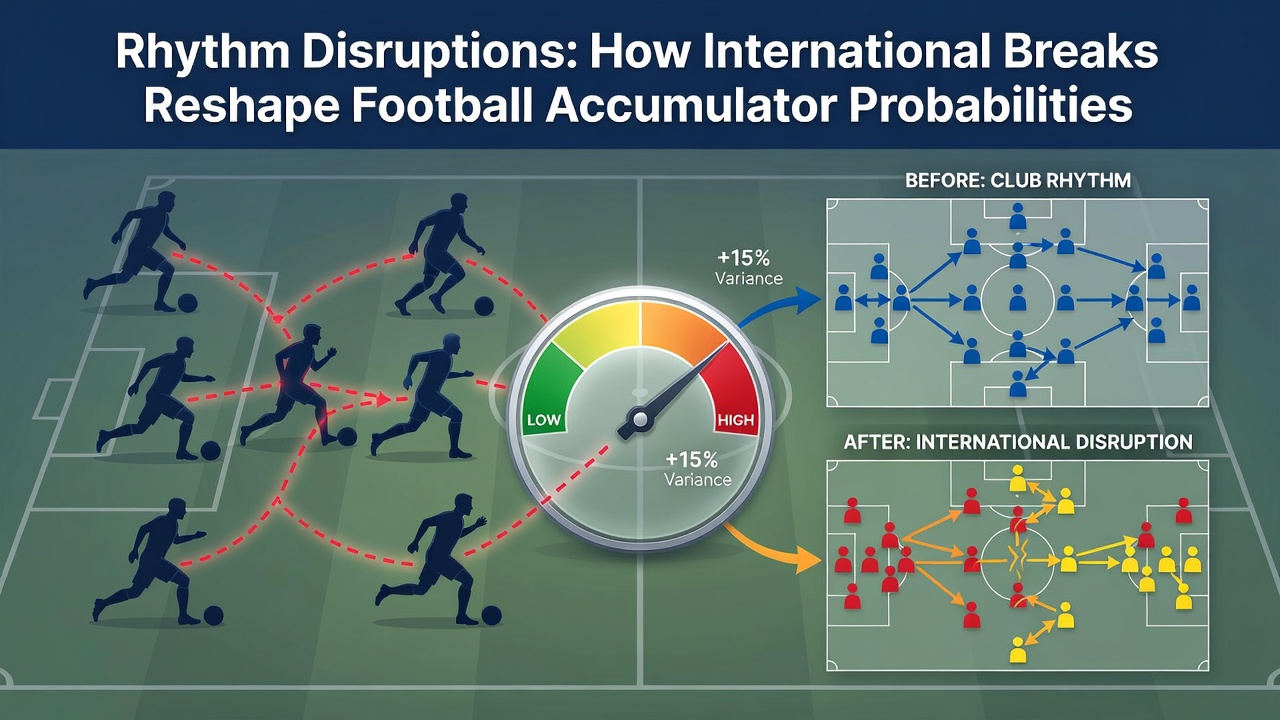
Team-specific research further refines these probabilities. Clubs that rely heavily on players who start multiple international matches record elevated soft-tissue injury rates in the 10 days after return. Bundesliga clubs, for instance, reported a 28 percent increase in hamstring complaints during the 2024 September window follow-up period. These absences shift squad depth calculations and increase the likelihood of unexpected draws or narrow home wins rather than the lopsided results often assumed in accumulator selections.
Accumulator Construction Adjustments
Accumulator builders who treat every matchweek as statistically independent overlook the clustered variance introduced by international calendars. When several legs of an accumulator involve teams returning from the same break window, the correlation between outcomes rises. A single underperforming side can therefore drag multiple legs simultaneously. Data from betting exchange archives demonstrates that accumulators containing four or more post-break matches exhibit payout rates 8 to 11 percent lower than equivalent pre-break constructions of identical length.
European governing bodies publish international calendars years in advance, and these schedules allow modelers to flag affected matchweeks. UEFA's published fixture lists, for example, permit advance identification of double-break periods where both midweek and weekend rounds fall inside the recovery window. Incorporating these flags into probability models narrows the gap between predicted and realized accumulator returns.
Regional Variations and Data Sources
Not every league responds identically. The Italian Serie A shows a smaller goal suppression effect after breaks than the Dutch Eredivisie, where squad rotation is more limited and travel distances for some players are greater. Australian researchers examining A-League data after comparable international pauses recorded similar directional changes, albeit on a smaller sample. Cross-referencing these regional datasets helps isolate the break effect from other variables such as weather or fixture congestion.
Industry reports from organizations tracking global match statistics confirm that the September 2026 window will again test these patterns. Observers note that leagues with earlier restart dates relative to the final international match tend to display stronger recovery curves by the second post-break weekend.
Conclusion
International breaks introduce systematic distortions into club performance metrics that propagate directly into accumulator probability calculations. Leagues, clubs, and data providers release schedules and injury reports that allow these distortions to be quantified in advance. Models that integrate travel loads, recovery timelines, and historical post-break results produce narrower confidence intervals around individual match outcomes and, by extension, around the combined probabilities that determine accumulator viability.