Referee Tendencies: Analyzing Their Role in Football Over/Under Markets
Logan Schmitz · Jun 18, 2026

Referee Tendencies: Analyzing Their Role in Football Over/Under Markets
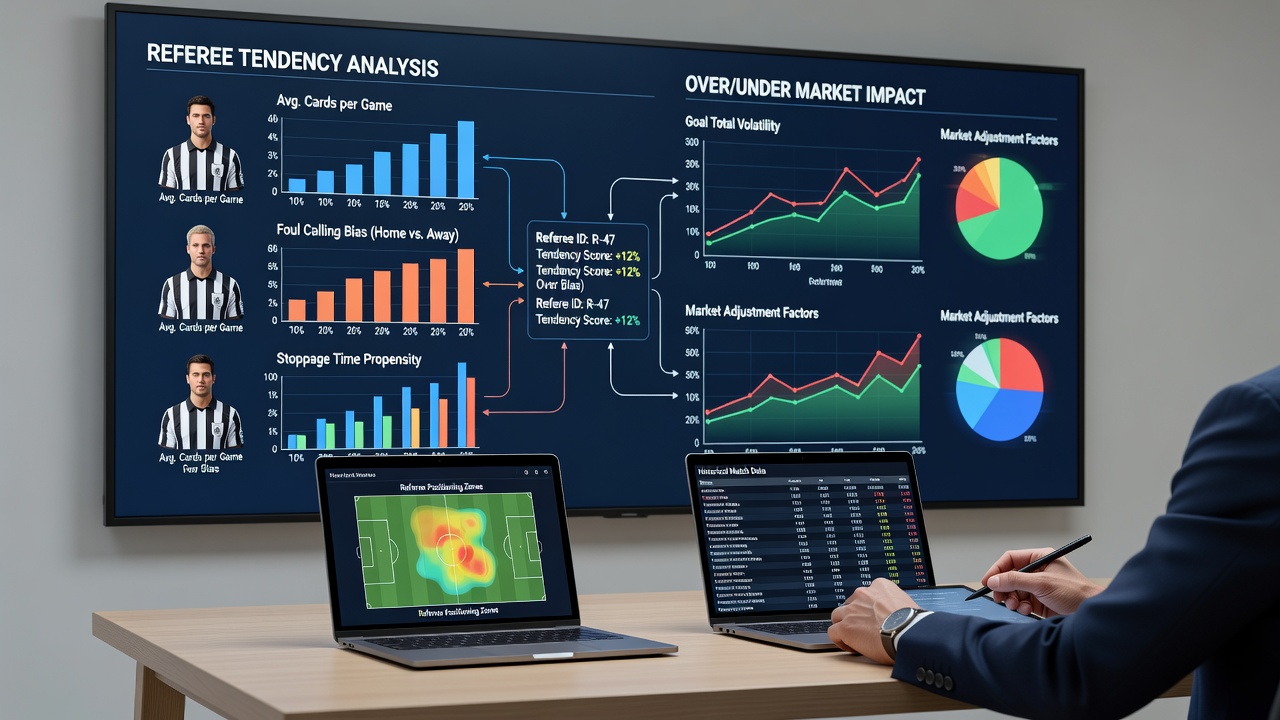
Referee decision patterns shape football matches in measurable ways that ripple through goal totals, and analysts track these tendencies across major leagues to understand their influence on over/under outcomes. Data from recent seasons shows that officials who issue higher numbers of cards per game often correlate with reduced scoring, while those who allow more physical play without frequent interruptions tend to preside over higher goal counts. Observers note that this relationship emerges because fouls and stoppages break up attacking sequences, limiting opportunities for fluid build-up play and set-piece situations that produce goals.
Patterns in Card Issuance and Game Flow
Research from European match databases indicates that referees averaging more than four yellow cards per fixture see average goals per game drop by roughly 0.3 compared to officials with lower card rates. This effect appears consistent across the Premier League, Bundesliga, and Serie A, where possession-based teams struggle to regain rhythm after multiple interruptions. Yet some referees maintain higher foul thresholds, permitting continued challenges that lead to open play and increased shot volumes, and those matches frequently finish above the total line. Studies conducted by sports analytics groups in Australia and Canada have documented similar trends in domestic competitions, confirming that referee style influences tempo more than random variance alone.
League-Specific Tendencies Emerging in 2026
By June 2026, tracking platforms had compiled referee performance metrics across thousands of fixtures, revealing distinct profiles for each competition. In the Bundesliga, officials issue fewer cards on average than their Serie A counterparts, which aligns with higher average goal outputs in German matches. Serie A data, meanwhile, shows a cluster of referees who enforce stricter interpretations of simulation and tactical fouling, resulting in more stoppages during the final twenty minutes when games often decide total outcomes. These patterns hold steady even after accounting for team styles, because the official controls the number of free kicks and added time periods that create late chances.
Impact on Over/Under Markets
Betting markets adjust totals lines based on expected goals, yet referee profiles introduce an additional variable that sharp bettors incorporate into models. When a high-card referee is assigned to a match featuring two defensive-minded sides, the under becomes more probable as attacking momentum stalls. Conversely, fixtures involving open teams paired with lenient officials show elevated over percentages, because fewer interruptions allow sustained pressure and crossing opportunities. Figures from independent research firms in the United States and Germany demonstrate that incorporating referee card averages into predictive algorithms improves accuracy on totals by several percentage points over models that ignore official tendencies.
Historical Examples and Statistical Correlations
One study released by a European sports research institute examined 1,200 matches from the 2024-2025 season and found that referees in the top quartile for cards per game produced under results in 54 percent of fixtures, compared with 47 percent for those in the bottom quartile. Another analysis covering South American leagues revealed that officials who extend added time beyond five minutes in the second half increase the likelihood of late goals, pushing more matches over the line. These correlations emerge because extra minutes often feature tired defenses and desperate attacking, creating high-xG situations that finish as goals. Analysts continue to monitor these variables because they remain relatively stable across a referee's career, allowing for reliable pre-match adjustments.
Assignment Practices and Market Adjustments
League bodies publish referee assignments days in advance, giving bettors time to review historical data before lines move. Markets sometimes lag in fully pricing referee effects, especially when an official returns from injury or moves between competitions. Data from the 2025-2026 campaign shows that totals lines in certain fixtures shifted by half a goal once sharp money targeted referee-influenced angles, yet early-week pricing often overlooked these factors. Those who study assignment patterns alongside team form and venue statistics gain an edge because referee tendencies compound or offset the expected goal environment created by the sides involved.
Conclusion
Referee tendencies represent a quantifiable factor in football over/under markets, supported by consistent data across multiple leagues and seasons. Card rates, foul thresholds, and added-time distributions alter game flow in ways that directly affect goal totals, and researchers continue to refine models that isolate these effects from team performance. As assignment schedules and performance metrics become more accessible, market participants incorporate referee profiles into their analysis, leading to more precise expectations around totals outcomes.