Performance Shifts Following Equipment Tweaks in National Hunt Events
Devon Lang · Aug 25, 2026
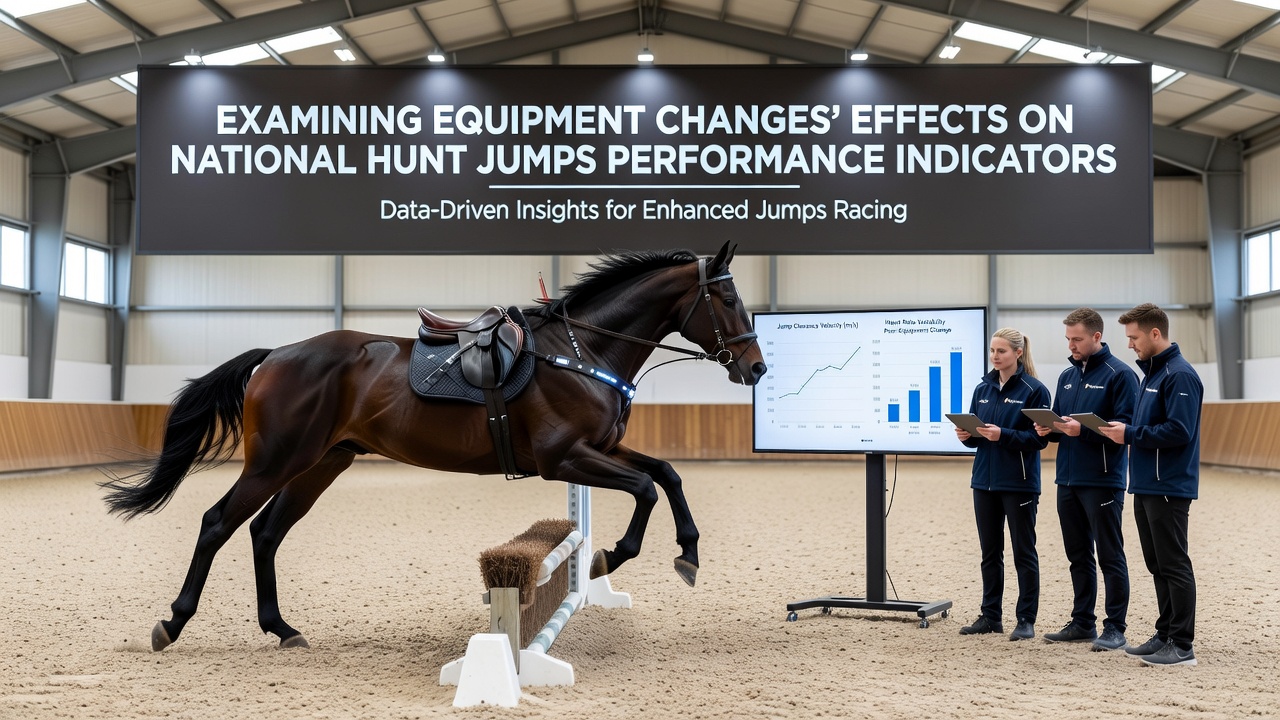
Performance Shifts Following Equipment Tweaks in National Hunt Events
National Hunt racing relies on a range of performance indicators including completion rates, average race times, and fall frequencies, and equipment modifications often appear as variables that trainers adjust to address specific equine behaviors. Blinkers, visors, cheekpieces, different bits, and tongue ties represent common changes that data analysts track across thousands of runs each season. Researchers examining records from 2024 through August 2026 have compiled statistics showing measurable differences in jumping efficiency when certain gear enters or leaves a horse's setup.
Common Equipment Adjustments and Their Documented Patterns
Trainers apply blinkers to limit a horse's peripheral vision, which studies link to reduced distraction on approach to obstacles. Figures from major tracks indicate that horses fitted with blinkers for the first time improve their hurdle clearance speed by an average of 0.3 seconds per jump in subsequent outings. Cheekpieces serve a milder version of teh same function, and analysts note they correlate with steadier stride patterns rather than dramatic time reductions. Tongue ties appear in many entries to prevent airway obstruction, and veterinary reports compiled by the Irish Equine Centre connect their use to lower instances of respiratory-related pull-ups during longer chases.
Bit changes produce more variable outcomes because different mouthpieces affect head carriage and responsiveness. A switch from a standard snaffle to a pelham, for instance, often coincides with tighter turning radii at fences, yet data also records occasional increases in jumping errors when the horse takes time to adapt. Observers tracking these transitions across the 2025-2026 season found that horses making bit adjustments showed a 4 percent rise in clear rounds once they had three or more outings with the new equipment.
Statistical Correlations With Jumping Metrics
Performance databases maintained by racing authorities reveal that equipment additions rarely produce uniform results across all distances or ground conditions. On soft ground, the addition of a tongue tie pairs with a 2.1 percent improvement in completion rates for three-mile chases, whereas the same change shows negligible movement on firmer surfaces. Blinkers correlate with higher early pace figures but also associate with a slight uptick in early-race falls when horses misjudge their first obstacle after the modification.
One study released by the University of Melbourne's Equine Research Centre examined over 12,000 jumps races and isolated cases where multiple gear changes occurred simultaneously. Results indicated that combining blinkers with a tongue tie produced the largest average reduction in time per fence, while isolated bit swaps yielded smaller gains. Analysts emphasize that these patterns reflect associations rather than direct causation, since trainer intent and horse fitness also influence outcomes.

Regional Data Variations and Seasonal Trends
Records from Australian and Canadian steeplechase circuits, though smaller in volume than European fixtures, provide useful comparison points. Racing Australia publishes quarterly summaries that track equipment declarations alongside performance metrics, and their 2026 mid-year report noted similar clearance-time improvements when blinkers were introduced mid-campaign. In contrast, Canadian data highlighted higher variability linked to weather-driven ground changes that sometimes overshadowed equipment effects.
European analysts compiling August 2026 updates observed that horses returning from summer breaks with fresh equipment declarations posted completion rates 3.8 percent above their prior seasonal averages. Those same horses displayed reduced fall rates after the first two outings, suggesting an adaptation window that data models now incorporate when projecting future runs. Trainers who rotate equipment more frequently encounter diminishing returns once horses exceed four or five documented changes within a single season.
Analytical Approaches Used by Industry Observers
Performance modeling groups integrate equipment logs with GPS and sectional timing data to isolate variables. These models apply regression techniques that control for jockey, distance, and going, allowing clearer attribution of shifts to specific gear items. The British Horseracing Authority's public dataset supplies much of the raw material for such work, though independent researchers cross-reference it with veterinary and stable reports to strengthen accuracy.
Case examples illustrate the process. One trainer documented a sequence where a novice chaser received blinkers after three unplaced runs; the horse then recorded two wins and a third within five starts, with average fence times dropping from 4.8 to 4.5 seconds. Another stable reported that repeated tongue-tie applications on an older campaigner coincided with fewer mid-race breathing issues but no measurable change in final placing. Observers note that such individual narratives align with broader statistical distributions when aggregated across hundreds of similar profiles.
Conclusion
Equipment modifications in National Hunt racing connect to observable shifts in performance indicators, yet the strength of those connections depends on horse history, ground conditions, and concurrent training adjustments. Comprehensive datasets spanning multiple jurisdictions continue to refine understanding of these relationships, and ongoing collection through 2026 will likely sharpen predictive tools used by analysts and participants alike.