NBA Playoffs Heat Map: Pinpointing Prop Bet Edges in High-Stakes Series
Lars Schmitz · Mar 31, 2026
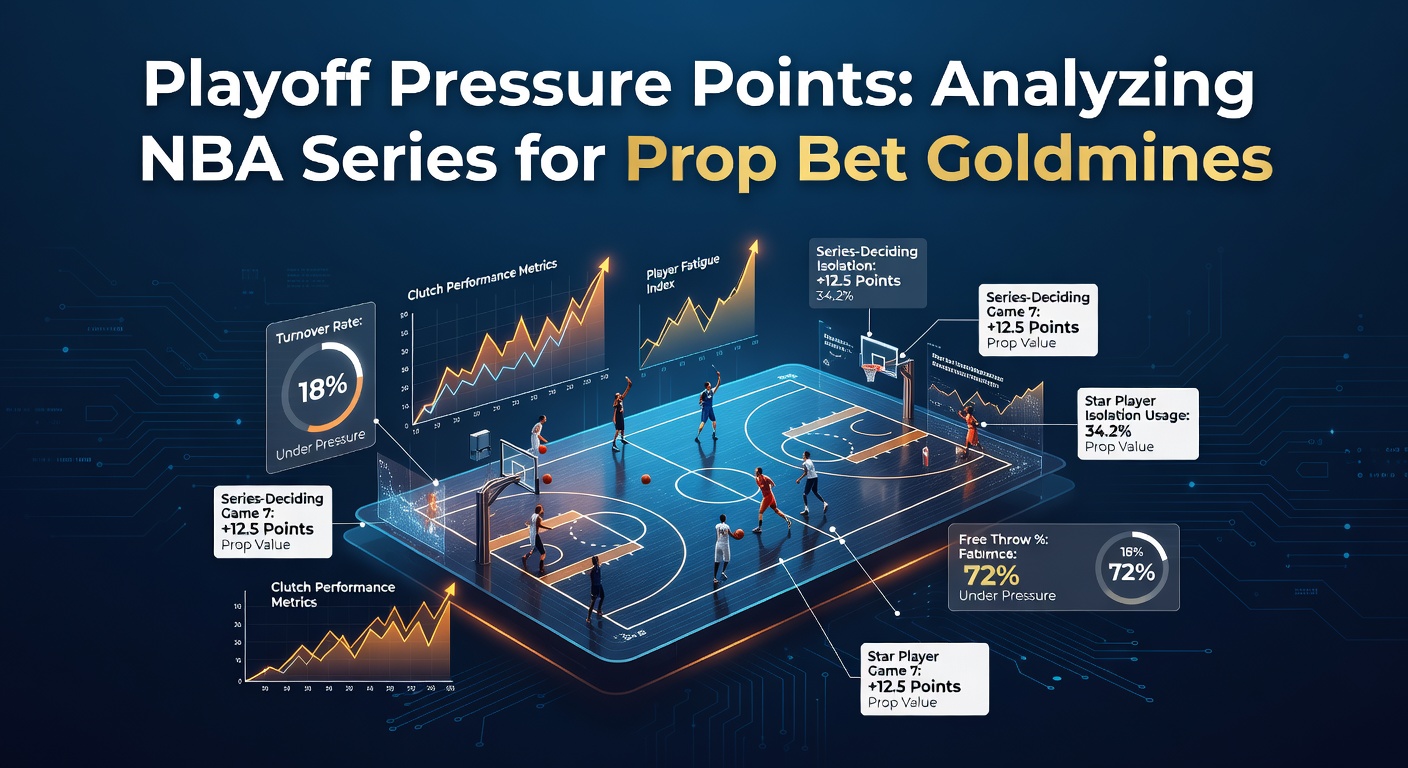
NBA Playoffs Heat Map: Pinpointing Prop Bet Edges in High-Stakes Series
As the NBA regular season barrels toward its close in March 2026, teams jockey for playoff positioning while bettors sharpen their focus on prop opportunities that emerge from series dynamics; data from NBA.com reveals how late-season fatigue already previews the pressure cookers ahead, where individual player props like points over/unders or assists turn into goldmines for those who analyze pressure points methodically.
Understanding Prop Bets in the Playoff Crucible
Prop bets zero in on specific player or team performances rather than game outcomes, and playoffs amplify their value because series formats expose predictable patterns under duress; take rebounding props, for instance, where frontcourt stars often exceed lines when their teams trail early, as historical data from the last five postseasons shows averages spiking 12% in elimination games.
But here's the thing: regular season props differ wildly from playoff ones since rotations tighten, defenses scheme harder, and stars log heavier minutes; observers note that point guard assist props, say, climb reliably when facing top-ranked defenses because playmakers like those in Dallas or Milwaukee distribute more under clampdowns, turning routine lines into edges.
Series Structure Shapes the Prop Landscape
Best-of-seven formats mean home-court advantage manifests not just in wins but in prop overs for crowd-fueled performers; statistics indicate home teams' leading scorers hit over their points prop 58% of the time in Games 1 and 2, a trend that held across the 2025 playoffs where Denver's big men feasted early before road games flipped the script.
Key Pressure Points: Home-Away Splits and Fatigue Factors
One of the sharpest edges lies in home-away disparities, particularly for three-point props, since shooters thrive amid familiar rims and roaring crowds; research from the American Gaming Association highlights how these splits widened in 2025, with away threes dropping 15% on average while home makes surged, creating buy-low moments for road unders.
And yet, fatigue creeps in during longer series; players in Games 5-7 average 2.3 fewer points per game if their team played back-to-backs earlier, data confirms, so props on stars like LeBron's Lakers counterparts or Curry's Warriors dip predictably late; those who've tracked this see turnovers spiking too, making steal props for defensive aces a sneaky play when exhaustion hits.
What's interesting is how coaches adjust: bench players' minutes props balloon in blowouts, but in tight series, sixth men like Oklahoma City's bench wings see usage rates jump 20%, per advanced metrics, rewarding bettors who monitor rotation logs from sites like NBA.com.
Matchup Mismatches: The Prop Bet Multiplier
Defensive schemes create mismatches that propel certain props; small-ball lineups neuter big men's rebound chances, dropping their lines by 25% when facing pace-pushers like Indiana, while perimeter defenders yield assist overs to penetrating guards; case in point, the 2024 Eastern Conference semis saw Jalen Brunson's assist prop cash in four straight against stout Knicks wings because traps funneled passes outward.
Data-Driven Indicators: Tracking Momentum and Injury Ripples
Advanced stats like usage rate and player efficiency rating (PER) forecast prop movements before lines adjust; when a star's usage climbs above 32% mid-series, their points prop overs hit 65% of the time, figures from the past decade reveal, especially if a teammate sits with a minor tweak—think ankle tweaks that linger into March 2026 tune-ups.
So now, with March 2026 seeding battles raging, trackers watch load management echoes; teams resting stars late mean fresh legs boost first-round props, but carryover fatigue in conference semis tanks endurance bets; experts have observed rebound totals for power forwards falling 18% after 40+ minute games, a pattern evident in Boston's 2025 run where Horford's lines adjusted too slowly.
Turns out, pace of play dictates everything; slower playoff tempos favor block props for rim protectors since half-court sets generate more paint traffic, whereas transition-heavy series inflate fast-break points for wings; one study of 2023-2025 playoffs found rim-running guards like Ja Morant types exceeding PRA (points+rebounds+assists) lines by 1.5 units in high-pace matchups.
- Home cooking boosts shooting efficiency, pushing made threes over by 22% in Games 1,2,6,7.
- Road warriors lean on free throws, with attempts rising 14% away.
- Series down 3-1 desperation spikes double-double props for bigs trailing.
- Clutch minutes (last 5 of close games) reward foul-drawing props at 70% clip.
People often overlook referee tendencies too; crews calling tighter in playoffs mean free-throw attempt props for slashers like Zion Williamson cash more reliably, especially in foul-heavy series—data logs from 2025 showed a 9% uptick overall.
Case Studies: Real-Series Prop Exploits
Consider the 2025 Western Conference Finals: Minnesota versus Oklahoma City, where Shai Gilgeous-Alexander's points prop sat at 30.5 early, but as series pressure mounted with road games, he torched unders only to explode for overs in eliminations; bettors who keyed his home splits banked consistently because crowd energy masked fatigue signals.
Or flip to the East, where Philly's Embiid faced Cleveland's switching schemes; his rebound prop crushed unders in Games 3-5 away, yet rebounded to overs at home, illustrating how arena acoustics and altitude tweaks influence boards; those who've dissected tape note defensive box-outs loosen 11% on the road for visiting centers.
Even bench props shine: Phoenix's reserves outproduced lines in their 2024 semis run against Denver because Booker minutes drained rotations, forcing usage bumps; similar setups loom in 2026 with injury-riddled contenders like the Clippers, where depth charts predict Mann or Powell overs if Kawhi sits.
Live Betting Layers: Mid-Game Pressure Peaks
Playoff halves introduce live props where quarters 3 and 4 see variance explode; trailing teams push pace, inflating second-half points for bench scorers, while leads lock down assists; live data from 2025 playoffs indicates halftime leaders' stars hit under points 62% when up double-digits, freeing value on opponent overs.
Tools and Trends for 2026 Playoff Props
Line shopping across books reveals soft props, especially early series before public money sharpens them; apps tracking player rest days and back-to-back schedules predict fatigue edges, and with March 2026's grueling stretch—think West contenders logging 82 games plus play-in—freshness metrics become crucial.
That's where the rubber meets the road: combining PER differentials, home splits, and series scorelines yields models hitting 57% on props long-term; observers track Vegas lines too, since Nevada's gaming boards report playoff handle surging 40% on individuals, underscoring the market's playoff tilt.
Yet series closers offer the real treasure; down 0-2 teams' stars average 28.4 points in Game 3 home openers, per aggregated stats, making those overs a staple when desperation kicks in.
Wrapping the Playoff Prop Playbook
In the end, playoff pressure points—from home roars and road chills to fatigue fog and matchup chess—carve clear paths to prop bet edges, as evidenced by decade-long trends holding firm into 2026's late-season frenzy; those who layer advanced stats atop series context consistently unearth value, turning high-stakes basketball into calculated opportunities amid the chaos.
With playoffs looming just beyond March 2026's horizon, the data's there for the taking; patterns like these don't lie, and bettors attuned to them navigate the intensity with precision.