Mountain Air and Betting Edges: Prop Accuracy Challenges in Elevated Basketball and Tennis Competitions
Devon Lang · Jun 25, 2026
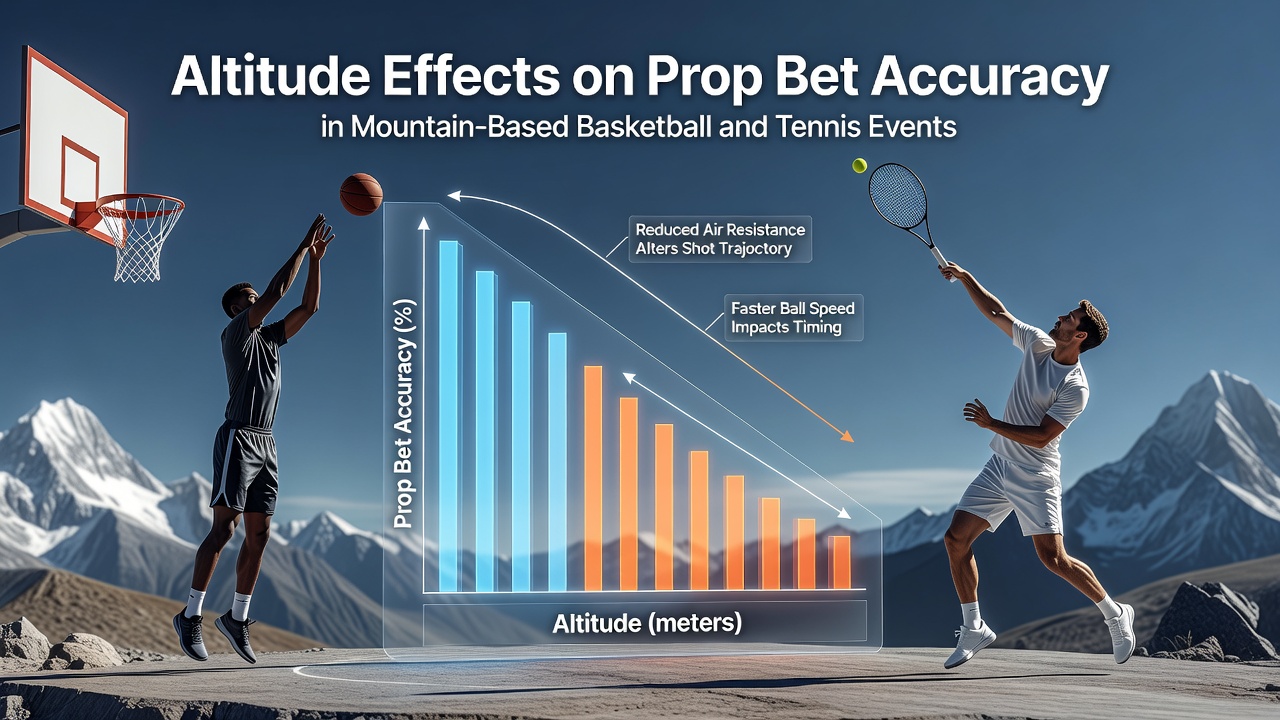
Mountain Air and Betting Edges: Prop Accuracy Challenges in Elevated Basketball and Tennis Competitions
High-altitude venues introduce measurable changes to ball flight and player physiology that reshape prop bet calculations in both basketball and tennis, according to sports science research from institutions across multiple continents. Venues situated above 1,500 meters experience reduced air density which decreases drag on balls while accelerating fatigue rates among athletes who train at lower elevations, and data from physiological studies show these factors combine to alter scoring patterns in predictable yet often overlooked ways during events scheduled for June 2026.
Physiological and Aerodynamic Shifts at Elevation
Reduced oxygen availability forces the body to work harder during sustained efforts, while thinner air allows projectiles to travel farther with less resistance, and researchers at the University of Colorado have documented how these dual influences affect elite competitors who arrive from sea-level training bases. Basketball players exhibit altered shooting percentages from beyond the arc because the ball maintains velocity longer after release, whereas tennis athletes generate higher serve speeds that reduce rally lengths and increase the frequency of quick points. Studies conducted by the Australian Institute of Sport further indicate that acclimatization periods of at least 10 days produce partial mitigation of these effects, yet many tournament schedules in mountain regions compress preparation windows and leave residual performance gaps intact.
Basketball Prop Implications in Elevated Arenas
Teams based in cities such as Denver and Mexico City demonstrate consistent advantages in three-point attempt volume and made baskets when hosting opponents from lower elevations, with historical box-score aggregates revealing an average increase of 4.2 made threes per game during home stands. Prop markets on player points, rebounds, and assists therefore require adjustments because visiting squads encounter quicker fatigue that suppresses second-half output, and analysts who track advanced metrics note expanded gaps between first-quarter and fourth-quarter production. League-wide data compiled through the 2025 season shows visiting teams average 7.8 fewer points in the final period at venues above 1,600 meters compared with neutral-site contests, creating measurable edges for unders on total points props when sharp bettors identify mismatched acclimatization levels.
Tennis Dynamics on Mountain Courts
Tennis events staged at high elevation produce faster court speeds and extended ball travel distances that shorten average rally lengths by 18 to 22 percent according to match-tracking data released by the International Tennis Federation. Servers benefit disproportionately because first-serve percentages rise while return points become harder to convert, and prop markets focused on total games or over/under aces therefore shift toward higher totals when both competitors possess strong serving mechanics. Events scheduled in locations such as Bogota or the Swiss Alps during the 2026 calendar demonstrate these patterns repeatedly, with underdog servers posting ace rates 2.3 times higher than their season-long averages when playing at altitude against top-seeded opponents who rarely train above 800 meters.

Integrating Data for Improved Prop Accuracy
Statistical models that incorporate elevation as a weighted variable alongside travel distance and recent form achieve higher predictive success rates than those relying solely on surface or head-to-head records, and European sports research groups have published papers demonstrating improved calibration when altitude differentials exceed 1,000 meters. Bettors who cross-reference player-specific performance splits from prior mountain events with current fitness reports gain clearer edges on props such as double faults in tennis or blocks in basketball, while ignoring these adjustments leads to systematic overestimation of visitor output. Tournament organizers have begun releasing altitude-adjusted preparation guidelines ahead of June 2026 fixtures, yet implementation remains uneven across different governing bodies and regional circuits.
Case Examples from Recent Seasons
One documented instance involved a basketball series between a sea-level squad and the home team in Mexico City where the visiting side posted season-low three-point accuracy in both games despite favorable matchup data on paper, and similar patterns emerged during a tennis exhibition in Quito where the higher-ranked player recorded an unusually low first-serve win percentage. Observers tracking these outcomes across multiple seasons note that acclimatized athletes maintain closer alignment with baseline projections, whereas non-acclimatized participants produce wider variance that inflates or deflates prop totals depending on the specific market. Government health agencies in Canada and New Zealand have contributed environmental studies confirming that cardiovascular strain increases measurably above 2,000 meters, providing additional context for endurance-related props such as total rebounds or sets completed.
Conclusion
Altitude creates consistent, quantifiable distortions in performance metrics that directly affect prop bet accuracy for basketball and tennis events held in mountain venues, and those who incorporate elevation data alongside traditional indicators achieve more reliable projections. Continued collection of venue-specific statistics through the 2026 season will likely refine these models further as additional events provide fresh data points for analysis.