Mapping Recovery Windows Across Leagues: Accumulator Insights from Football Rest Schedules and Tennis Travel Demands
Tina Klein · Jul 26, 2026
Mapping Recovery Windows Across Leagues: Accumulator Insights from Football Rest Schedules and Tennis Travel Demands
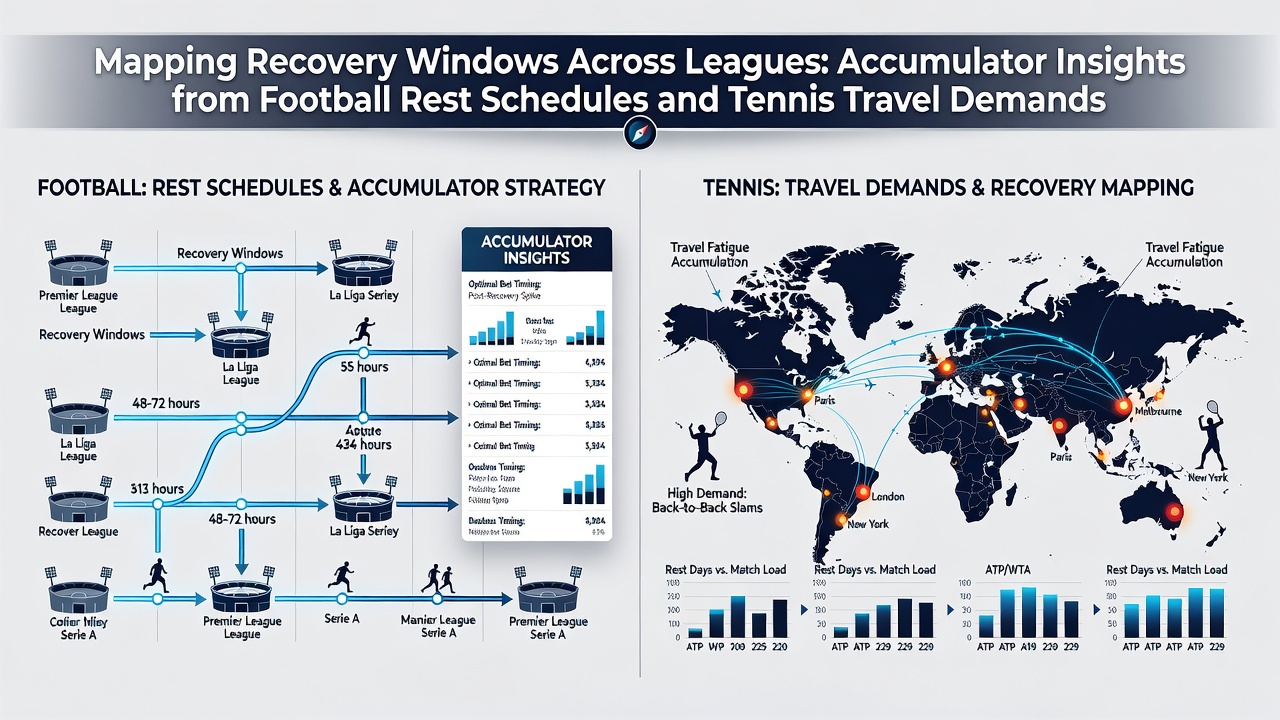
Recovery timelines shape accumulator outcomes across football and tennis because rest intervals between fixtures directly influence player output and match results. League schedules in football often compress recovery into three or four days, while tennis calendars require athletes to cross time zones and adapt to varying court conditions within similar windows. Data from match tracking systems show that squads with extended rest periods record higher win percentages in subsequent games, and similar patterns appear in tennis when players receive byes or schedule gaps that allow physical reset.
Football Rest Patterns and League Variations
Premier League clubs face repeated short recovery cycles during winter months, whereas European competitions add midweek fixtures that further limit preparation time. Studies published in the Journal of Sports Sciences indicate teams averaging fewer than four full rest days between matches experience measurable declines in high-intensity running distance and defensive organization. July 2026 schedules already list several clubs with back-to-back domestic and continental commitments, creating predictable windows where fatigue accumulates across multiple game weeks.
Observers tracking Serie A and La Liga note that clubs with larger squads rotate personnel more effectively during these tight periods, producing steadier statistical profiles. Accumulator builders examine these rotation patterns because rested squads tend to cover spreads and exceed goal totals at higher rates than fatigued sides. Match data archives reveal consistent correlations between rest differentials and over-performance in both attacking and set-piece metrics.
Tennis Travel Loads and Recovery Demands
Professional tennis circuits require players to manage long-haul flights between consecutive tournaments, often arriving with limited adaptation time before first-round matches. ATP and WTA event calendars in July 2026 include clusters of hard-court stops across North America and Europe that force rapid surface transitions and jet-lag recovery. Research from sports physiology groups shows that travel exceeding six time zones correlates with reduced serve accuracy and slower court coverage in early tournament rounds.
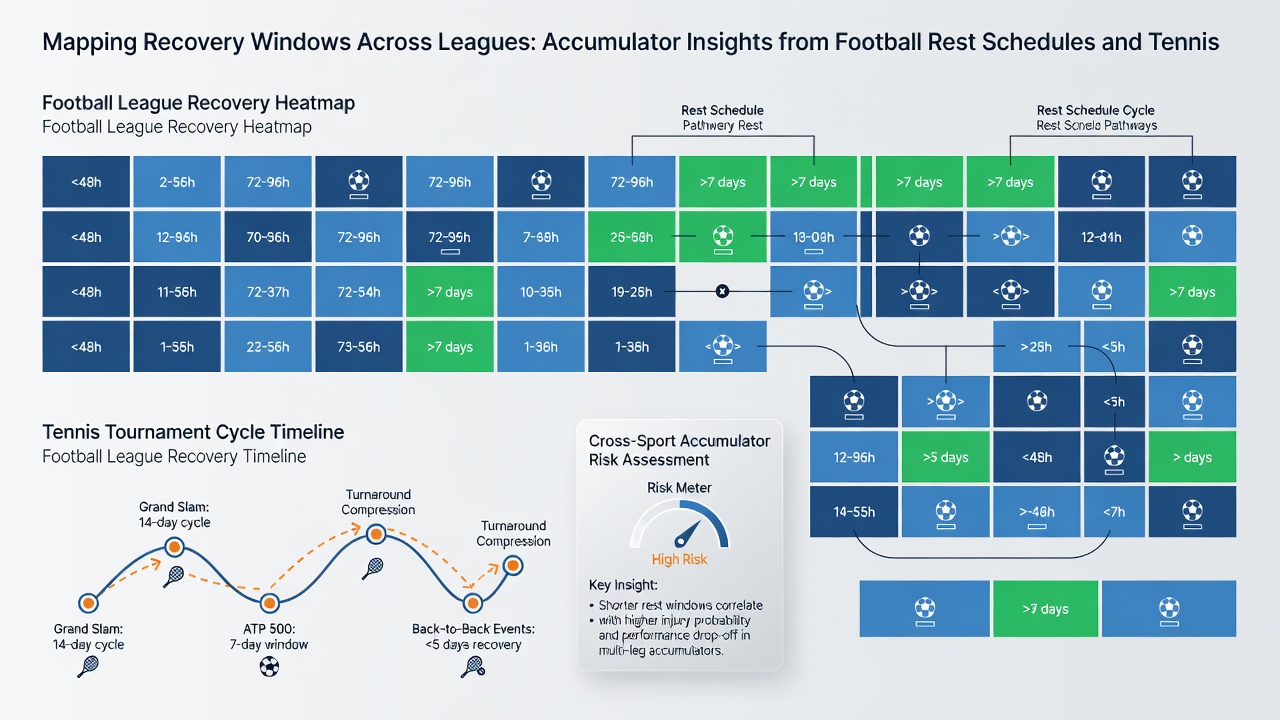
Those who study player performance logs note that athletes scheduled for consecutive weeks without byes post lower win percentages against opponents who benefited from earlier withdrawals or shorter travel. Surface changes compound these effects because players must adjust movement patterns while still managing residual fatigue from prior events. Accumulator selections that incorporate these travel-recovery variables often align with statistical edges in both match-winner and total-games markets.
Intersecting Data for Cross-Sport Accumulators
Combined football and tennis selections benefit when bettors map overlapping recovery windows rather than treating each sport in isolation. A midweek football fixture involving limited rest can coincide with a tennis quarterfinal where the favored player has just completed a five-set match on a different continent. Historical performance datasets indicate that identifying these simultaneous stress points improves selection accuracy across multi-leg bets. Industry reports from the Sports Science Institute highlight that recovery monitoring tools now provide standardized metrics that translate across both codes.
League calendars and tournament draws published for summer 2026 already flag several high-impact periods where multiple teams and players face compressed schedules simultaneously. Analysts who cross-reference these dates with player availability reports construct accumulators that account for expected output drops rather than relying solely on ranking or form trends.
Conclusion
Recovery window analysis supplies measurable inputs for accumulator construction when football rest gaps and tennis travel demands receive equal attention. Schedule data released ahead of July 2026 events continue to demonstrate that fatigue patterns produce repeatable statistical deviations across both sports. Those who integrate these variables into selection processes access structured edges grounded in documented performance records rather than isolated match previews.