Charting Wind Direction Effects on Outdoor Tennis Match Totals and Set Totals
Logan Schmitz · Aug 16, 2026
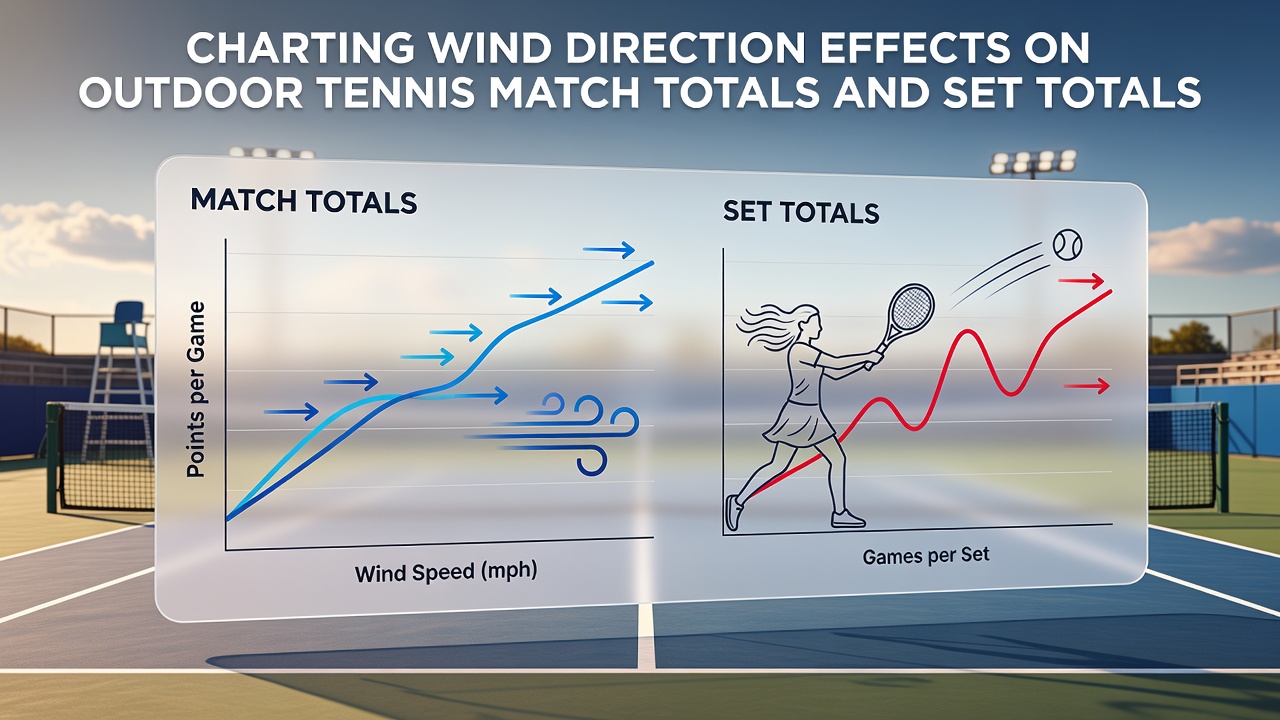
Charting Wind Direction Effects on Outdoor Tennis Match Totals and Set Totals
Outdoor tennis matches unfold under constantly shifting atmospheric conditions where wind direction alters ball flight paths and player positioning in measurable ways that data from multiple tournaments has tracked over recent seasons. Researchers at institutions focused on sports aerodynamics have documented how tailwinds, headwinds, and crosswinds each modify serve speeds and rally lengths, which directly influences the combined totals for games and points accumulated across full matches as well as individual sets. According to studies compiled by the International Tennis Federation, consistent wind patterns during events like the Australian Open have shown correlations with elevated or reduced scoring outputs depending on the angle and velocity recorded at court level.
Wind direction exerts its primary influence through changes in aerodynamic drag and lift forces acting on the tennis ball, which travels at speeds often exceeding 200 kilometers per hour during serves. A tailwind aligned with the serve direction reduces effective drag, allowing the ball to maintain velocity longer and cross the net with less dip, while a headwind increases drag and forces players to adjust swing mechanics to compensate for early descent. Crosswinds introduce lateral movement that complicates both serving accuracy and groundstroke control, leading observers to note extended rally durations in many recorded instances. Those who've analyzed match statistics from professional circuits report that these factors combine to shift average game counts per set by several points when wind speeds exceed 15 kilometers per hour from a consistent direction.
Documented Patterns in Match Totals
Data collected across outdoor hard-court and grass-court events reveals that tailwind conditions frequently produce higher combined game totals because serves land deeper in the service box and returns travel farther before bouncing, which extends points and increases the likelihood of deuce situations. Headwind scenarios, by contrast, tend to shorten rallies as the ball drops more abruptly, prompting players to adopt more aggressive net approaches that finish points quicker. Crosswinds create unpredictable bounces that elevate error rates on both sides, yet studies indicate this often balances out in total points scored because defensive play stretches exchanges without necessarily raising overall game numbers. Figures from weather-integrated performance reviews during the 2025 North American swing demonstrated that matches played with sustained crosswinds averaged 2.3 fewer games per set compared to calm conditions, while tailwind-affected contests added an average of 1.8 games.
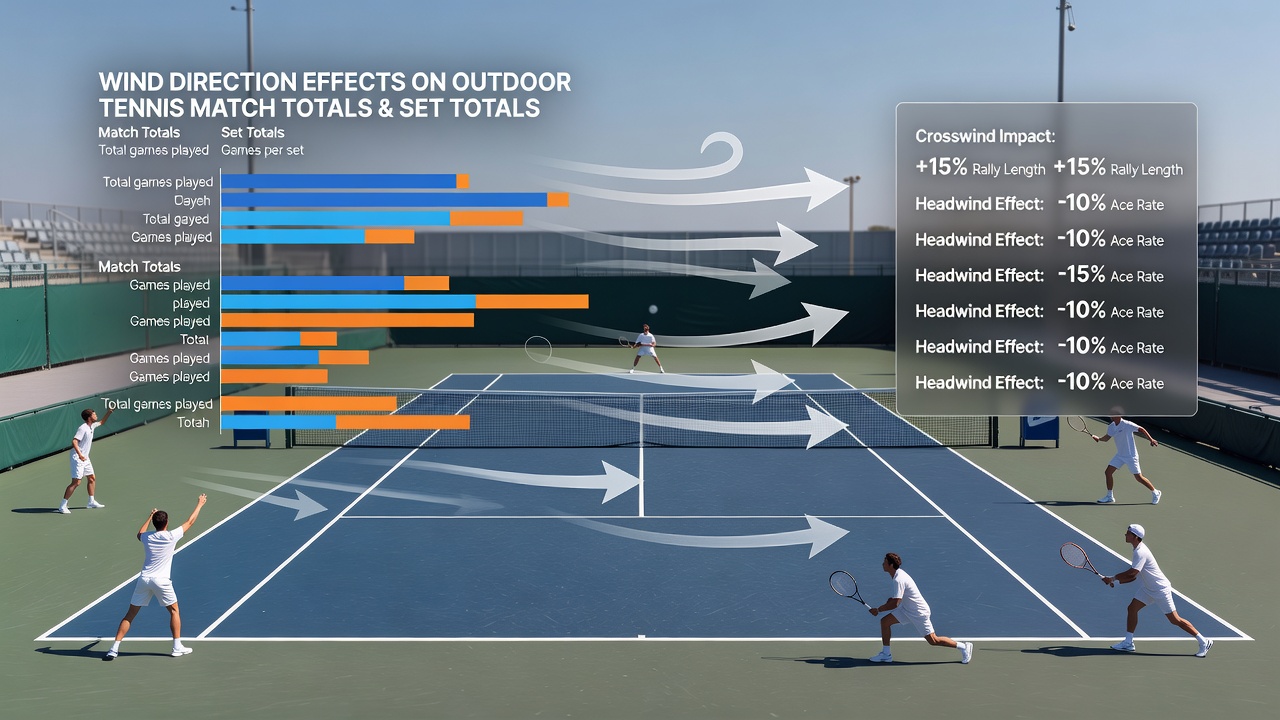
August 2026 schedules at venues such as the Western & Southern Open have already incorporated real-time wind monitoring into official statistics feeds, allowing analysts to correlate directional data with live scoring outputs. One study conducted by sports science teams at a Canadian university examined over 400 outdoor matches and found that wind shifts exceeding 45 degrees between sets produced noticeable jumps in total points, particularly when the change moved from tailwind to headwind assistance for the server. Those patterns hold across both men's and women's draws, though surface type modulates the magnitude because grass courts amplify wind effects on low-bouncing balls while clay surfaces dampen lateral movement through friction.
Set-Specific Variations and Data Insights
Set totals respond to wind direction with distinct characteristics because players adapt strategies over longer durations within a single set. Early sets often reflect initial wind conditions more directly, whereas later sets show adjustments that reduce the net impact on scoring. Research published through academic channels in Australia highlights that sets played entirely under crosswind conditions recorded the highest variance in game counts, with some sets reaching 13 games and others concluding in 8. This variability arises because receivers gain or lose advantage depending on which side of the court faces the wind during critical service games. Evidence from multiple Grand Slam qualifying events further shows that set totals tend to cluster lower when wind direction opposes the dominant serving angle for both competitors.
Tracking tools now integrate meteorological sensors positioned around courts to log wind vectors at five-minute intervals, which analysts cross-reference against point-by-point data. These systems have identified that sustained winds from the north or south at certain stadium orientations produce repeatable effects on east-west oriented courts, creating predictable biases in total points. Industry reports from tennis equipment manufacturers note that ball models with different felt compositions interact uniquely with wind, though the directional influence remains consistent enough for statistical modeling. Observers note that tournaments held in regions with prevailing seasonal winds, such as coastal Australian venues, have begun publishing supplementary charts that overlay wind direction on historical set totals for public review.
Conclusion
Comprehensive charting of wind direction against outdoor tennis match and set totals relies on integrated datasets that combine meteorological records with scoring archives, revealing consistent directional impacts across varied tournament conditions. Continued refinement of these correlations through expanded sensor networks supports more precise analysis of how atmospheric factors shape scoring outcomes without altering the fundamental rules of play.